
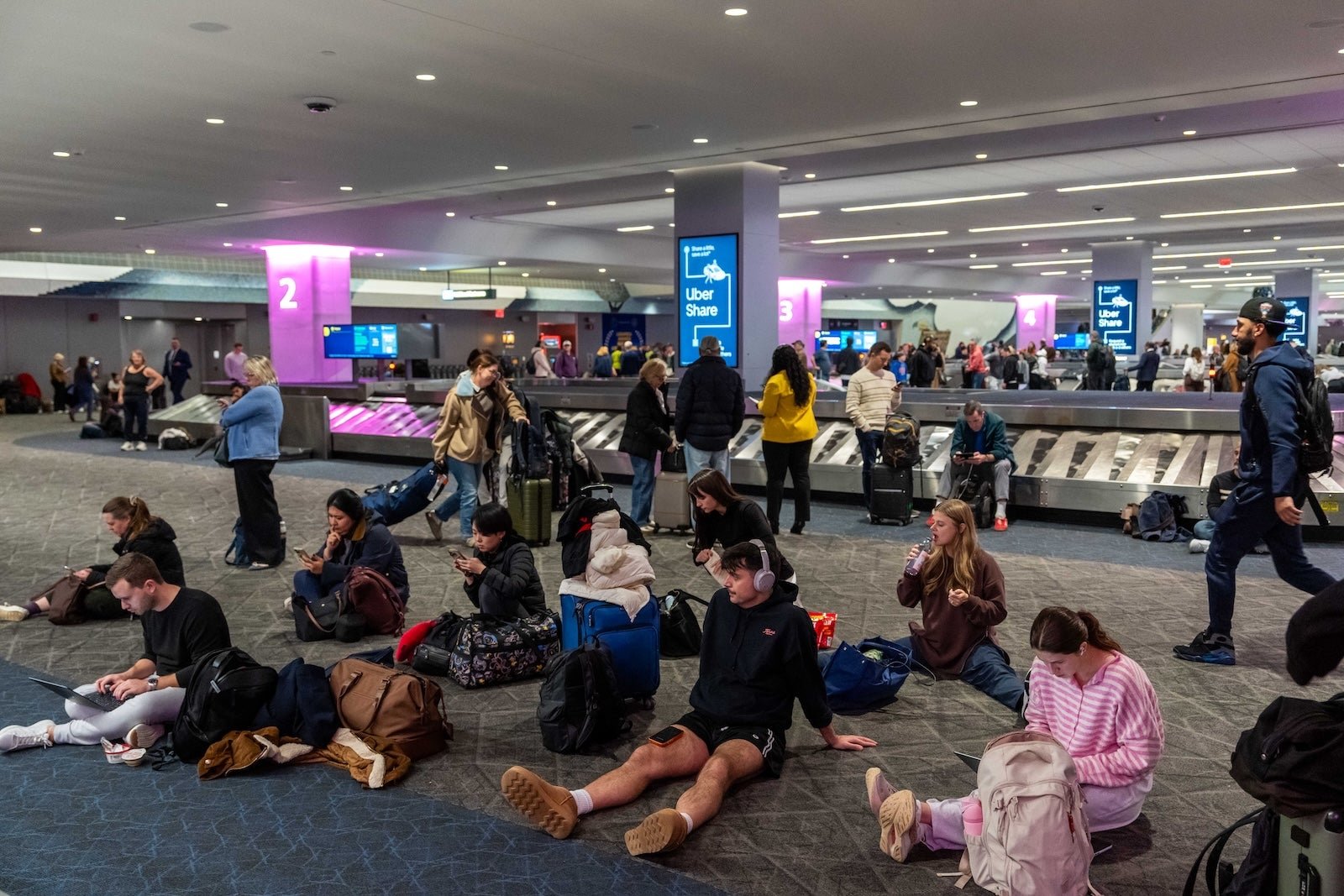
Flight cancellations began to ease significantly on Monday, following one of the worst weekends for air travel in recent memory.
More than 300 flights for Monday had been canceled by mid-morning, according to FlightAware, though that marked a significant improvement from the past few days.
Over the weekend, carriers scrubbed more than 18,000 departures over three days in the wake of a rare nationwide ground stop on Friday.
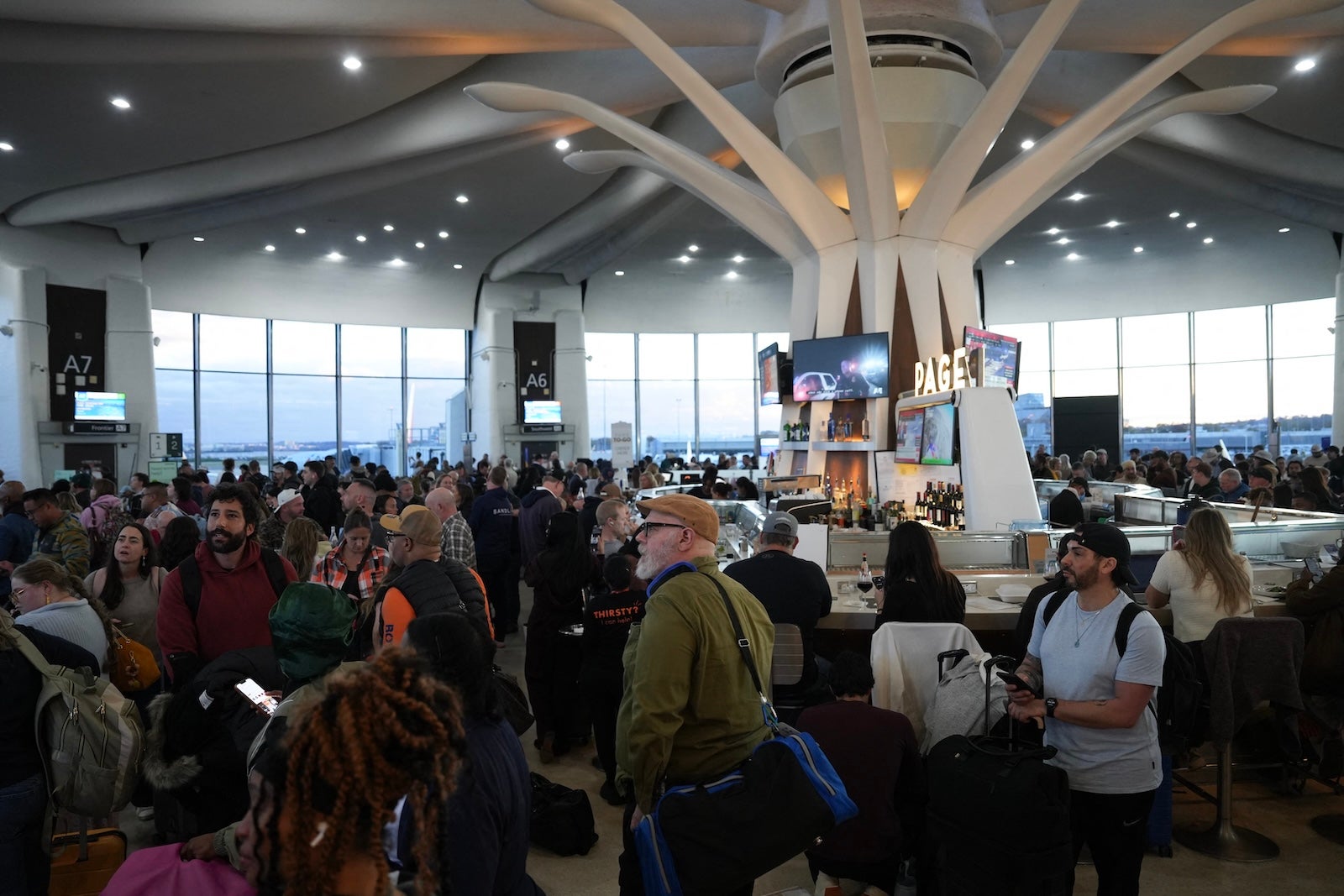
The disruption left planes, crewmembers, passengers and their baggage out of place — and fueled what one major U.S. carrier has called one of the most significant disruptions it’s ever seen.
| Day | U.S. flight cancellations |
|---|---|
| <b>Friday, Nov. 13</b> | <span style=”font-weight: 400;”>9,201</span> |
| <b>Saturday, Nov. 14</b> | <span style=”font-weight: 400;”>6,699</span> |
| <b>Sunday, Nov. 15</b> | <span style=”font-weight: 400;”>2,336 </span> |
| <b>3-day total</b> | <span style=”font-weight: 400;”>18,236</span> |
| <i><span style=”font-weight: 400;”>Monday, Nov. 16 </span></i> | <i><span style=”font-weight: 400;”>304 (as of 9:45 a.m. EST)</span></i> |
Source: FlightAware
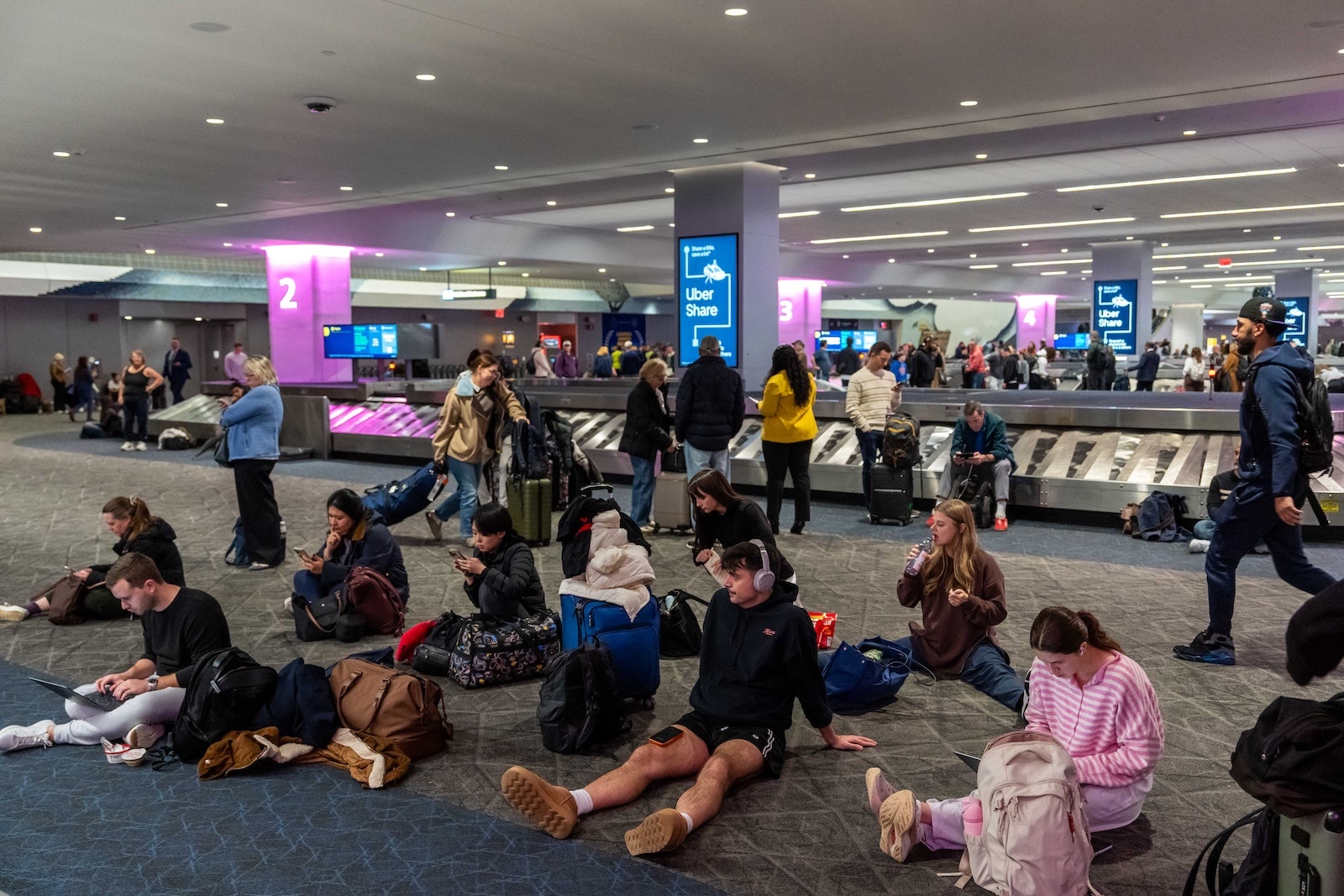
Most significant air travel meltdown in recent memory
The scope of this weekend’s travel woes topped even the most significant air travel meltdowns travelers have seen in recent years.
Between Friday and Sunday, airlines canceled more flights than we saw at the height of last fall’s federal government shutdown — when callouts among unpaid air traffic controllers snarled the system.
In a letter to customers this weekend, American Airlines executives called the travel woes “among the most significant operational impacts American has experienced.”
What happened?
The Federal Aviation Administration ordered a nationwide ground stop late Friday afternoon after discovering a communications outage affecting air traffic control.
It happened as crews were working to upgrade critical FAA equipment, apparently overloading the system amid a switch from copper wiring to fiber at one of the agency’s facilities.
The disruption marked only the second time since 9/11 that a ground stop affecting the entire nation had been issued.
Across the country, air travel came to a halt, with planes unable to takeoff for several hours. Then, after the FAA lifted its takeoff ban, airlines faced an uphill battle to resume operations with planes, crewmembers, passengers and baggage out of place.
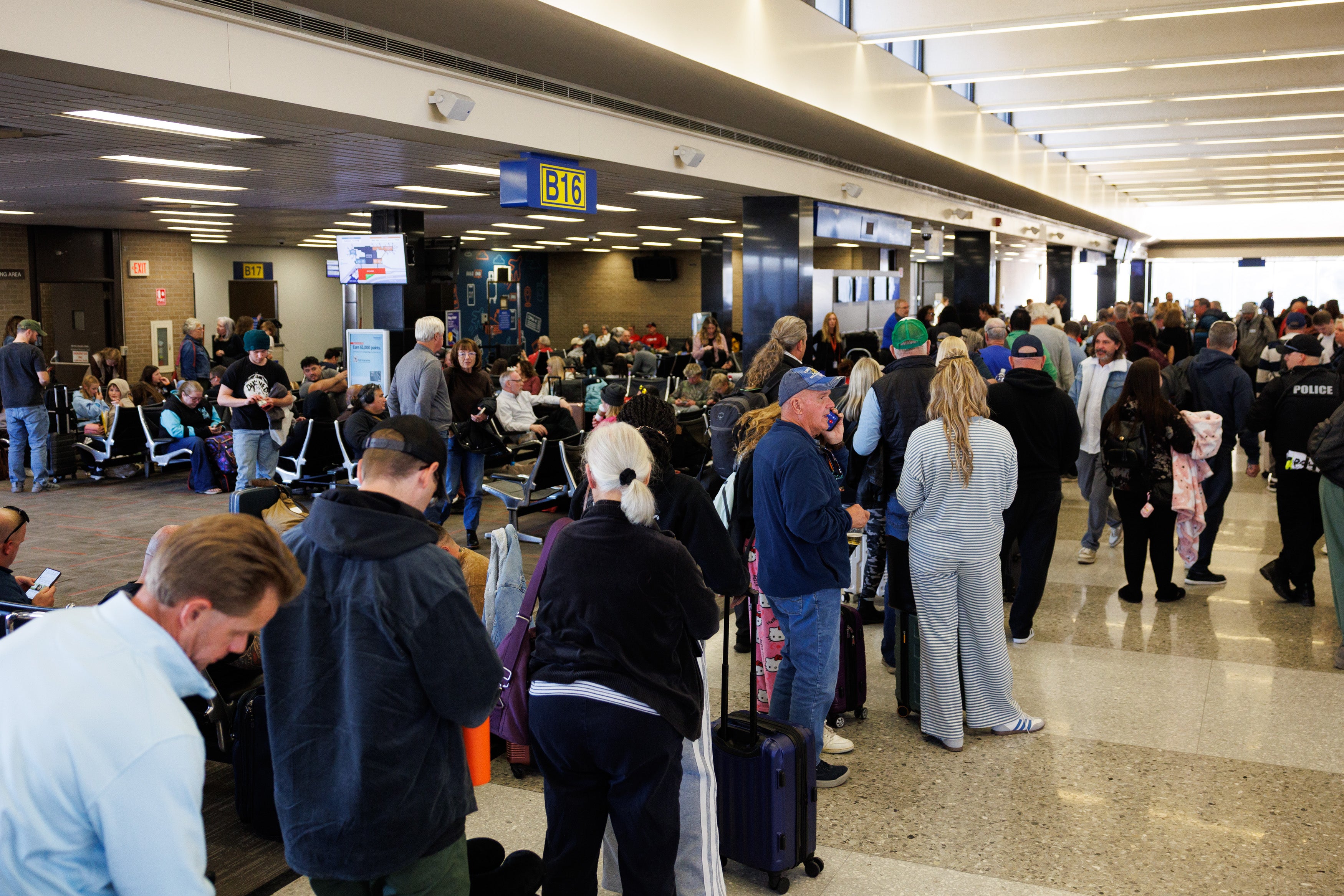
By Monday, the nation’s air travel system was running far more smoothly.
As of 9:45 a.m. EST, American had reported 161 cancellations for the day, per FlightAware — about 4% of its mainline operation.
All other mainline U.S. carriers reported 30 or fewer cancellations.
Flexible travel waivers in place
Throughout the weekend, major airlines offered travel waivers, allowing affected passengers greater flexibility to change their itineraries.
Some carriers extended those advisories into the work week.
Most notably, American Airlines’ waiver covered flyers booked through Wednesday, since AA’s recovery was still a work in progress as of Monday morning. Here is what each carrier noted about the ground stop:
- American Airlines
- Delta Air Lines
- United Airlines
- Southwest Airlines
- Alaska Airlines and Hawaiian Airlines
- JetBlue
- Frontier Airlines
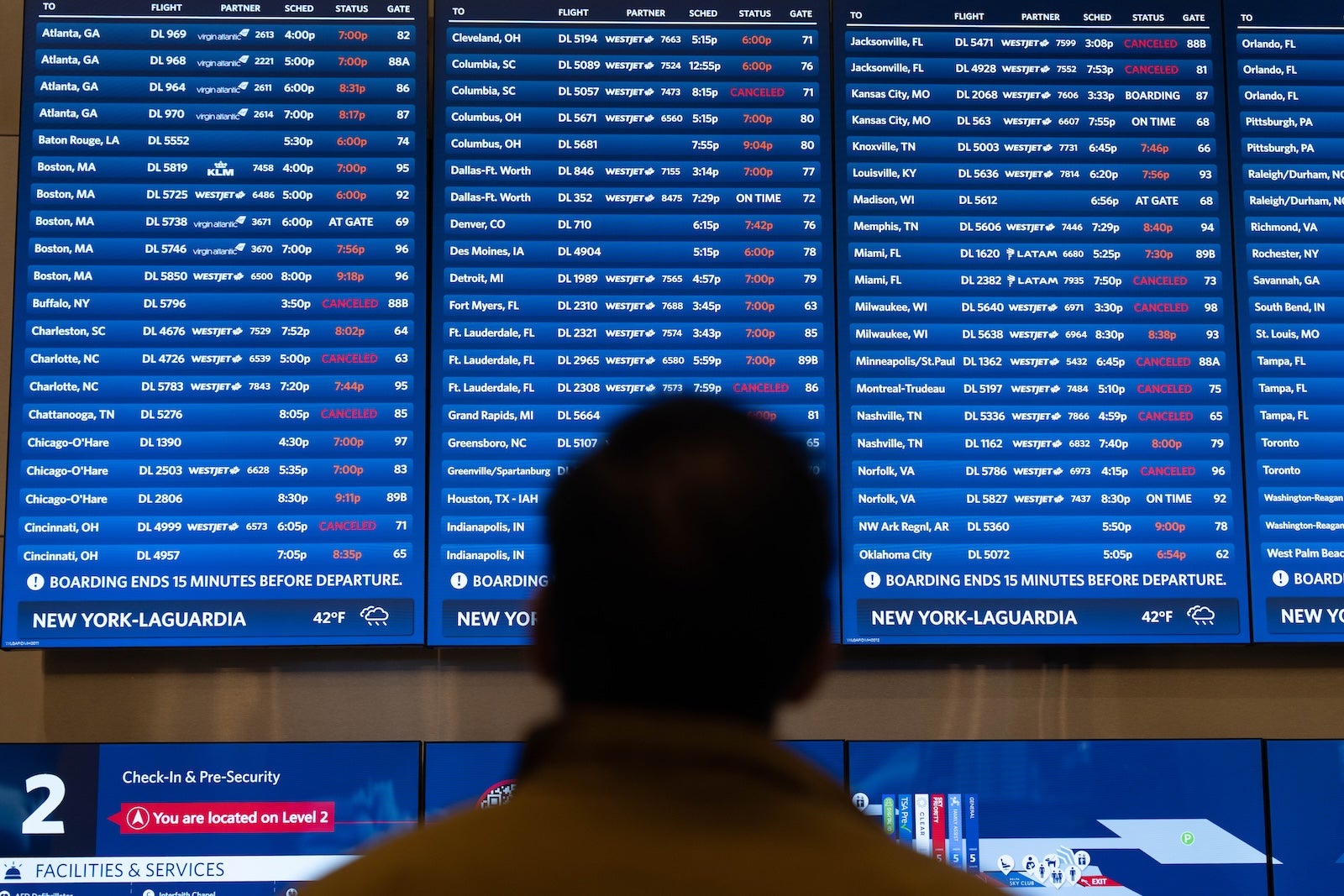
Should you get a refund if you were affected?
If your trip was affected by this weekend’s air travel meltdown, you may be owed a refund.
Under U.S. Department of Transportation rules, passengers are entitled to a full refund if their flight is canceled or significantly delayed, regardless of the reason.
However, the refund rules apply only to passengers who do not accept a rebooked flight.
This provision could be helpful for travelers who opted to stay home and not fly or travelers who opted to drive, take the train or book a backup flight on a different airline.
But if the airline canceled your Saturday flight and rebooked you for Sunday, you likely will not be eligible for a refund.
Will airlines pay if you got stranded?
Not likely.
Because this disruption was due to issues outside airlines’ control, carriers are unlikely to reimburse stranded passengers for hotel, ground transportation and meal costs.
Some rewards credit cards do offer built-in trip delay or cancellation protection if you used them to book your original airline tickets.
However, it’s not guaranteed that those benefits will cover FAA groundings of this nature. Still, save your receipts for any unexpected expenses in case you’re eligible for reimbursement.
As we often say: You can always ask.
Thanksgiving rush just days away
As air travel gets back on track following this weekend’s airport chaos, there’s one major detail to note: We’re just days away from one of the biggest travel rushes of the year.
Next week will mark the start of Thanksgiving travel.
Typically, the Sunday after Thanksgiving is the busiest day of the year at airports.
All eyes will be on how airlines and the air traffic control system perform.
Fortunately, it appears operations are returning to normal — suggesting this past weekend’s disruptions should have little impact on holiday travel.
Related reading:
Editorial disclaimer: Opinions expressed here are the author’s alone, not those of any bank, credit card issuer, airline or hotel chain, and have not been reviewed, approved or otherwise endorsed by any of these entities.